Tuesday, January 18, 2011

Lulu and the Brontosaurus


Horn Book (November/December, 2010)
Spoiled Lulu wants a pet brontosaurus for her birthday, even after her parents say no. Since no is not a word Lulu is used to hearing, she throws a temper tantrum and runs away into the forest to find a brontosaurus, who, to her shock, wants to make Lulu his pet. As Lulu flees the dinosaur, her run-ins with forest creatures prove that her tiff with the brontosaurus has made Lulu more understanding, compassionate, and polite; she even says "please" and "thank you." Multiple endings allow readers to explore various outcomes, adding a goofy thread to an already entertaining story. The third-person narrator's voice is sassy and funny, repeatedly speaking directly to the reader about the story -- "OKAY! All right! You don't have to tell me! I know!" (explaining that she knows that dinosaurs have never lived with people, and that brontosauruses are actually called apatosauruses now). Playful typefaces add emphasis and spunk, injecting the text with visual emotion. Lane Smith's almost-pointillist black-and-white illustrations are vivacious and expressive, depicting as clearly as the text does Lulu's bratty-turned-polite personality. The energetic tone of the narration and unique structure of the multiple endings, combined with an inviting page design, make this early chapter book one readers will say "yes" to. katrina hedeen

Justin Case School, Drool, and Other Daily Disasters


Kirkus Review starred (April 15, 2010)
Third grader Justin Case gets this nickname thanks to his amazing ability to worry about everything. His journal chronicles his nightmares and self-fulfilling prophecies of doom. He carries concerns about school, sports and friendships to wild extremes, and he creates a litany of characters and events that strike terror at every turn, from the imaginary robber Big Boy to his beloved stuffed animals, which wage a war over control of his bed, to the boiler at the way back of the basement--and anything else his incredibly active and freewheeling imagination can conjure. For him "there's always tomorrow for all the bad things that didn't happen today." He doesn't notice that he is also kind, dependable, tenacious and highly creative, as well as a very good friend and big brother. Vail employs easy, direct language in a rhythm and syntax that captures the essence of a charming, lovable and very believable boy. Readers transitioning to longer fiction will groan, sympathize and laugh out loud in delight. Absolutely marvelous. (Fiction. 7-10)

Dear Primo A Letter to My Cousin


Kirkus Review (March 1, 2010)
In a story based on the author's childhood experiences, two cousins, Charlie and Carlitos, exchange letters. Charlie lives in the United States; his primo Carlitos lives in Mexico. They both write about the friends, games, foods, fiestas and holidays they know. Like the characters in "The Town Mouse and the Country Mouse," their lives are very different. But readers will discover that there are more than differences. There is something that unifies them: They both wish to meet each other someday. What sets this title apart are Tonatiuh's outstanding full-page illustrations, reminiscent of the aesthetic and style of the Mixtec codices. His clever use of colors, Mayan blue and Indian red for the Mexican setting and a variety of grays, blacks and browns mixed with bright colors for the U.S. urban scenes, the varying typefaces used on each side of the story and the inclusion of Spanish terms in Carlitos's letter all contribute to differentiate both cultural experiences but make them at the same time positive, attractive and special. (glossary) (Picture book. 4-8)

Guys Read


Booklist starred (October 1, 2010 (Vol. 107, No. 3))
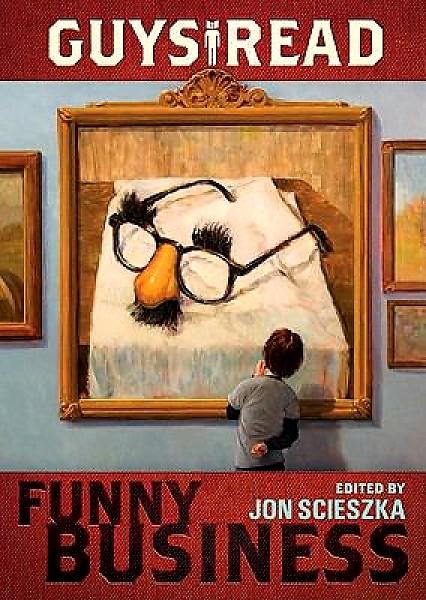
Grades 4-7. The funny fellow (Jon Scieszka) with the impressive title (Emeritus National Ambassador for Children’s Literature) presents a collection of 10 humorous (you were expecting tragedy?) stories by some leading lights in literature for young readers. This is the first volume of the promised official Guys Read library, which is named for Scieszka’s well-known Web site, designed, like this book, to encourage boys to read. And what better way to start than with this collection of howlers by the likes of Eoin Colfer, David Lubar, Christopher Paul Curtis, and other yuk-inducing luminaries. Standouts include Kate DiCamillo (the lone female among the authors) and editor Scieszka’s charmer of a story in letters between a famous author named Maureen O’Toople and a boy named Joe; David Yoo’s wacky, laugh-out-loud story about a disappointed father and an evil turkey; and from the diabolical imagination of Jack Gantos, a cautionary tale about dangerous friends and rusty pliers. A must-have collection for the boys in your library—and while you’re at it, get a copy for the girls, too!

Tuesday, January 11, 2011

The Fantastic Secret of Owen Jester


Booklist (September 15, 2010 (Vol. 107, No. 2))
Grades 4-6. Owen Jester has captured the biggest, greenest, slimiest, most beautiful bullfrog ever to be seen in Carter, Georgia. He has named it Tooley Graham, and he has built a swell cage for it in his bedroom. Owen is very happy. But Tooley is not. In fact, according to Owen’s snoopy, know-it-all neighbor, Viola, the frog is downright sad. But this is not Owen’s fantastic secret. That arrives the night he hears something fall off a passing train, and when he discovers what it is, he has a genuine, bona fide fantastic secret, which may not be revealed here. Suffice it to say, it launches an adventure involving Owen, his two best friends, and (shudder) Viola. O’Connor’s latest—with her signature southern setting—is diverting, though it lacks suspense, and at times the characters seem less strongly realized than in her other works. Nevertheless, the story is smoothly written, the secret is ingenious and believable, and who can resist a frog named Tooley Graham?

The Fabled Fifth Graders of Aesop Elementary School


Horn Book (September/October, 2010)
Mr. Jupiter, adventurer turned teacher, has agreed to stay on for another year with the most dreaded group of kids in Aesop Elementary history. Twenty fifth-graders, especially these twenty, promise to be a chal-lenge. We know he is up for them when he compares them to a bungee-jump off the Empire State Building and catching the Loch Ness monster. Following the same format as she did when these kids were in fourth grade, Fleming tells her tale through connected short stories that each end with a moral (it's not called Aesop Elementary for nothing!). Mr. Jupiter leads his class, clad in Aztec headdresses, into the school, dancing and wing-flapping all the way. And the moral? "Birds of a feather flock together." The names of the characters -- from Bernadette Braggadoccio to Humphrey Parrot -- let the reader know that things are going to get silly. We go through the year from projects to spelling bee to graduation, and after two years together, this crew is sad to say goodbye to the teacher who has made it all possible. A rare adventure -- one that many teachers and students will take to heart. robin l. smith

Dust Devil


Booklist starred (September 1, 2010 (Vol. 107, No. 1))
Preschool-Grade 2. Children who know Angelica Longrider, the “wildest wildcat in Tennessee” in the Caldecott Honor Book Swamp Angel (1994), will cheer her return in this sequel, which sends the barefoot, bear-wrestling giant to Montana. After rearranging a mountain or two, Angel feels settled in her new home. All she needs is a horse powerful enough to support her Himalayan size, and she finds her answer when a dust storm hits in the summer of 1835. Leaping onto the swirling funnel clouds of grime, she wrestles the storm until it magically takes equine shape and becomes Dust Devil, her trusty sidekick, who arrives just in time to help her take on a team of larger-than-life bandits, led by Backward Bart. Once again, Isaacs’ story and Zelinsky’s oil-paint-on-wood artwork create a laugh-out-loud tall tale with folksy phrasing and slapstick exaggeration. There are really two adventures in one here, which makes for a lengthy read-aloud, but children will delight in the deadpan, Old West narration and every gleefully silly, expertly rendered visual detail, from Bart’s steed (a saloon-sized mosquito) to Angel’s full-branched pine-tree knitting needles. A few pourqoui elements wrap up this handsomely designed, thoroughly entertaining stand-alone sequel.